General Requirements Sensors and Transducers
In selecting equipment sensors and transducers are appropriate and in accordance with the system to be censored is necessary to note the general requirements of the following sensors: (D Sharon, et al, 1982)
a. linearity
There are many sensors that generate output signals that vary continuously in response to the continuously changing inputs. For example, a heat sensor can generate a voltage in accordance with the heat felt. In such cases, usually it is known exactly how changes in output compared with the input in the form of a graph. Figure 3.1 shows the relationship of two different heat sensors. The straight line in Figure 3.1 (a). shows a linear response, whereas in Figure 3.1 (b). is a non-linear response.
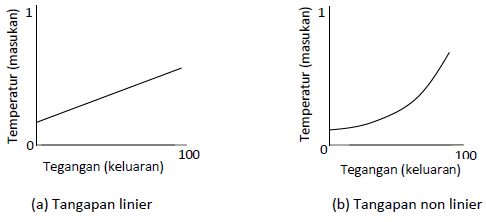
Figure 3.1 The output of the transducer heat
b. sensitivity
Sensitivity will show how far the sensitivity of the sensor to the measured quantity. Sensitivity is often also expressed with numbers that indicate the “change unit output than input change”. Beberepa heat sensor may have a sensitivity that is expressed by “one volt per degree”, which means a change of one degree in input will result in a change of one volt outputs.
Other heat sensors may have sensitivity “two volts per degree”, which means it has kepakaan twice from the first sensor. The linearity of the sensor also affects the sensitivity of the sensor. If the linear response, the sensitivity will be the same for the whole measurement range. Sensor with responses in Figure 3.1 (b) would be more sensitive to high temperatures than at low temperatures.
c. response time
The response time of the sensor shows how fast response to input changes. For example, an instrument with a frequency response that is ugly is a mercury thermometer. The input and the output is the temperature mercury positions. Suppose the temperature changes occur gradually and continuously over time, as shown in Figure 3.2 (a). Frequency is the number of cycles in one second and is given in hertz (Hz). {1 hertz means one cycle per second, 1 kilohertz means 1000 cycles per second].
At low frequencies, which is when the temperature changes slowly, the thermometer will follow the change by “faithful”. But when the temperature changes very quickly see Figure 3.2 (b) it is not expected to see a big change in a mercury thermometer, because he is slow and will only show average temperatures.
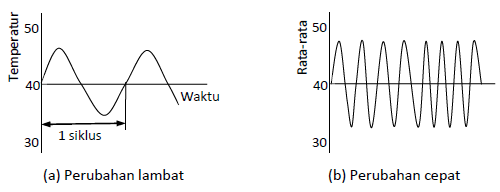
Figure 3.2 Temperature change continuously
There are various ways to express the frequency response of a sensor. For example “one millivolts at 500 hertz”. Frequency response can also be expressed as “decibel (db)”, which is to compare the output power at a particular frequency with output power at the reference frequency.
