Voltage Step and Touch Voltage
During an interruption relation to the ground (ground fault), an electric current flowing through the grounding system to ground rod or other grounding system (the metal structure, grounding wire) and returned to the source of electrical power. The possibility of electric current flow can occur along the ground at a certain distance around the point where the ground gets reinforcement or into voltage. Electrical current will follow in the section closest to the fault current drain conductors.
Voltage step (step potential) caused by the flow of fault current through the ground. The closer the personnel with a ground rod or a grounded device, the greater the concentration of flows and the greater the voltage or electric potential. The flow of electrical current creates a voltage drop (voltage drop) because of the electric current flowing through the ground and the person or personnel maintenance stand with wide footfall such as shown in Figure 1.6, becomes part of the bridge of a voltage drop that creates a path parallel to the flow of electric current ,
The larger the width of footsteps personnel, the greater the voltage difference is perceived by the personnel. To protect themselves or to avoid danger to personnel exposed to a voltage step that is being worked on equipotential zone, can do the best defense is simple: always be wary of any step voltage. For the random, then the other personnel who are not concerned with the disorder who are standing on the ground were warned to steer clear of the ground fault location.
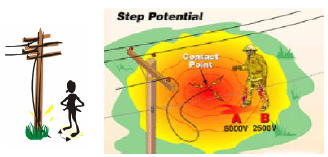
Figure 1.6 Voltage Step
This means that the personnel who stood near the point of fault currents if the fault current to flow to ground will cause a large potential difference between the leg to the foot. The potential difference will decrease in areas farther from the point of interruption.
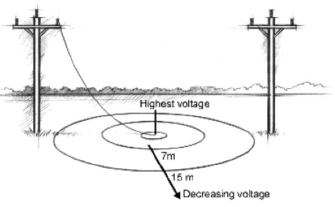
Figure 1.7 Magnitude Voltage Step
Voltage Touch
Touch voltage is the source of the same problems as the voltage step (step potential) – See Figure 1.9. regarding touch voltage current flow interruption (fault current) to the ground caused by the voltage difference between the contact point to the ground and adjacent conductive structures.

Figure 1.9 Voltage Touch
