GGL and Voltage
Electrical voltage can be exemplified by the water pressure in the water tower. On top of the tower water is stored in a water bath and connected with me through a pipe opening and closing the tap. If the higher the placement of a water bath the greater the pressure, as well as when the lower position of the water tub the lower the pressure of the water. According to the electron theory, if a positively charged object when the object if the loss of electrons and negatively charged if the object is an excess of electrons.
In these circumstances the charge difference arises power / energy potential that lies between these objects. The potential energy can demonstrate the ability to carry out the work, so that when a piece of wire conductor is connected between two different objects such charge will cause the energy transfer between objects. The energy switchover will take place continuously for no voltage difference.
The occurrence of a voltage difference is because every charge has a potential energy to drive a charge of others by appealing (to the charge that is not the same or dissimilar) or refuse (to charge the same or similar). Different voltage can be also generated by providing electric pressure of a power plant to one conductor. Battery or generator can act as an electric pump to generate a voltage in as between the two points.
Unit to measure this voltage is volt (written with the notation V), which is taken from the name of an Italian scholar Alessandro Volta (1775-1827). The voltage difference between two terminals can vary, ranging from the one millionth of a volt to several million volts. The voltage difference between the terminals of PLN there were 110 volt, 220 volt, 380 volt, 20 kVolt, 150 kvolt, 500 kvolt, and others. The voltage difference between the terminals of the battery is a 6 volt, 12 volt, 24 volt, and others, while the battery terminal voltage difference is generally 1.5 volts.
Ohm’s law
The relationship between electrical current, electrical voltage and electrical resistance in a circuit expressed in Ohm’s law (as described in Figure 3.1). Ohm’s name is taken from a physicist and mathematician jermals named George Simon Ohm (1787 – 1854) which makes this theory. When Ohm make experiments about electricity, he found among other things:
a) If the barriers remain, the flow in each circuit is directly proportional to the voltage. When the voltage increases, the aruspun increases as well as when the flow is reduced, then the smaller aruspun
b) When a fixed voltage, current in the circuit be inversely proportional to the circuit, so that when the barriers increases the flow will decrease and vice versa when the barrier is reduced, the flow will be even greater.
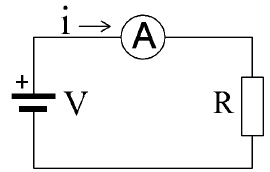
Figure 4.1 The relationship of current, voltage and resistance
Unit of electrical resistance is the ohm (Ω symbol: read omega). Ohm’s law can dinyataka n in the form of an equation with the following formula:

R: the resistance (ohms),
I: the magnitude of the electric current flow (amperes), and
V: large voltage that works in a closed circuit (volt).

Figure 4.2 The circle formula to find, power, current, voltage and resistance
