Sensor Strain Gauge (SG)
Strain gauge can be used as a position sensor. SG in operation utilizing sehingganya change in resistance can be used to measure very small displacements due to bending (tensile stress) or stretching (tensile strain). Definition of elasticity (ε) strain gauge is the ratio change in length (ΔL) of the original length (L), namely:

or the ratio of change in resistance (ΔR) against initial resistance (R) equal to the gage factor (Gf) multiplied starin gage elasticity (ε):

In construction SG made of thin metal (foil) is placed on paper. SG affixed to the detection process with the specimen in two ways:
1. Directions sealing / stretch made all possible (axial)
2. The direction perpendicular sealing / stretch made as short as possible (lateral)
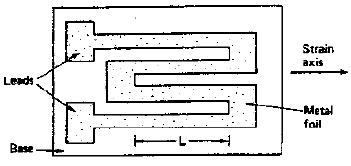
Figure 3.24 The form of physical strain gauge
Gauge factor (Gf) is the degree of elasticity of the metal material from SG.
• incompressible metal Gf = 2
• piezoresistive Gf = 30
• piezoresistive sensors are used in IC pressure sensor
To perform the test object sensor on the circuit and SG placement is
• arranged in a bridge circuit
• two adjacent strain gauge is used, one for stretching / sealing, one for temperature compensation in a position that is not affected stretch / sealing
• frequency response specified period where the strain gauge is placed
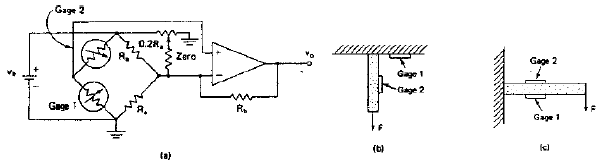
Figure 3.25 Installation of strain gauge: (a) the bridge (b) gage1 and gage 2 position 90 (c) 1 and gage gage 2 parallel position
