Vitamin A
Vitamin A is only found in animals, such as fish oils, liver nd others. But dlam plants if there is a substance that resembles vitamin A so-called carotene. This carotene after arriving in the liver, is converted into vitamin A as it is, carotene is also known as pro-vitamin A.
Vitamin A is generally stable to heat, acid, and alkali. However, this vitamin has properties that are easily oxidized by air and will be damaged when heated at high temperatures.
a) The function of vitamin A to the body.
– As the material necessary to make rhodopsin in prosse vision.
– To network maintenance coatings.
– To assist in the growth of the body.

Figure 2.35: Source of Vitamin Ab) Vitamin A in Food Ingredients
In foodstuffs there is a form of vitamin A carotene as esters of vitamin A and the vitamin A-free. Biological liveliness carotene is much lower compared with vitamin A. Because carotenoids are the main source of vitamin A for people in developing countries, then the absorption and availability of carotene needs to be known. Vitamin A in foods is expressed in a unit called the international unity (abbreviated ki) which is about 0.6 micrograms of beta-carotene.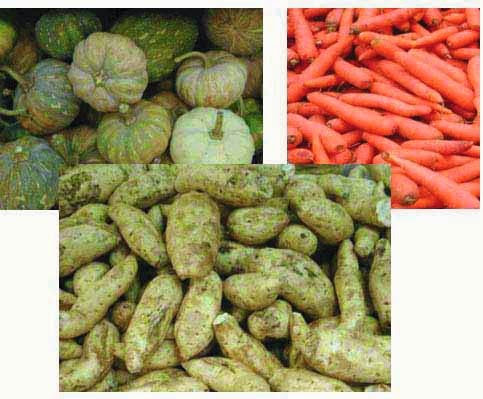
In foodstuffs there is a form of vitamin A carotene as esters of vitamin A and the vitamin A-free. Biological liveliness carotene is much lower compared with vitamin A. Because carotenoids are the main source of vitamin A for people in developing countries, then the absorption and availability of carotene needs to be known. Vitamin A in foods is expressed in a unit called the international unity (abbreviated ki) which is about 0.6 micrograms of beta-carotene.

Figure 2:36: Food rich in caroteneThere is a direct relationship between the degree of green vegetables with higher levels of carotenoids. The more green the leaves the higher levels of carotenes, which are pale leaves like lettuce and cabbage, squash, poor in carotene.

Figure 2:37: Vegetables poor caroteneFrom the study it is found that the body’s ability to absorb carotenoids from vegetables only 33-58% or an average of 50%. Not all of the absorbed carotene can be converted into vitamin A.

Figure 2 38: Vegetables rich in carotenes
