Resistor Circuit and Calculation
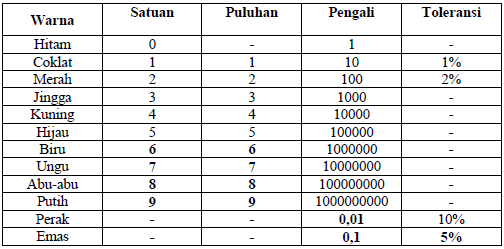
Resistor serves to inhibit current and dividing voltage, nominal resistance value and tolerance shown by the tape of a resistor color code on the resistor body. The first color and the second is the value of the unit, and tens, the third color indicates the number zero and the fourth color is tolerance. Example: A resistor has the color in the order: red, purple, yellow, and gold; then the price: 270000 Ω or 270 kΩ tolerance of 5%.
Table 1. Resistor Color Code
Series A. The series resistor
Electrical circuit that only has a single path for the flow of electric current called a series circuit. Resistor in series as shown in Figure 3.23, on any resistance to flow the same current magnitude. In the series circuit, the entire resistance value of each added to obtain a total resistance value. In this case, the value of the total voltage of the power supply voltage is equal to the number that exist in each resistor.
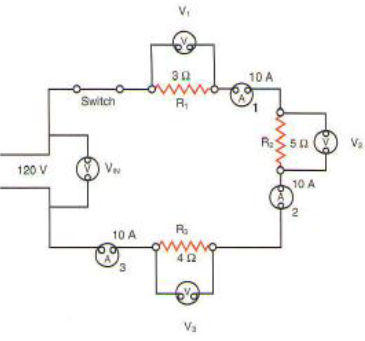
Figure 3.23 Circuit Resistor Series Three
B. Parallel circuit Resistors
An electrical circuit that allows current to flow through one or more conductors or resistors or existing electrical circuit at the same time is called a parallel circuit. Figure 3.24 shows an example of an electric circuit consisting of lights and motors are arranged in parallel.
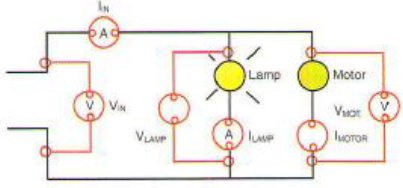
Figure 3.24 Electric Circuits In Parallel
In a parallel circuit, the amount of current flowing in each branch of the flow of the current flowing through the lamp and through the motor is equal to the input current total issued by the power supply. The current flowing in each branch of the current depends on the value of existing resistance in the circuit in question. If the lamp has a resistance of magnitude fourth of the value of resistance possessed motorcycle, then 4/5 part of the current will flow through the lamp and 1/5 part of the current will flow through the motor. The voltage on each branch the same parallel.
C. The series combination of Series-Parallel
In the circuit of series-parallel combination of resistor, has the nature of a series resistor series and parallel circuits. In combination series-parallel circuit, the current flowing in each of the passive elements are not all the same, except the passive elements connected in series. The amount of current in the current path of the lamp and motor lines equal to the current dkeluarkan by the source. Determine the value of Vs?
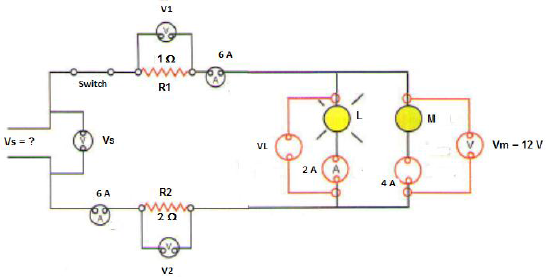
Figure 3.25 The combination of Series-Parallel Circuit
