Measurement With Fork Trees
a) Physical form fork tree
Physical form forks of trees form the bercagak crossbar and having a scale (unit of measurement). Scale tree forks at first in the form of a hose diameter, has now been converted into units of measure. The units of measurement used is cm with the smallest unit of measurement in millimeters.
b) Basic Work
Note Figure 38 below.
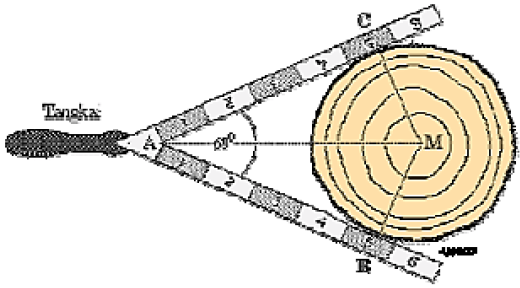
Figure 38. How to use a tree fork
How to use the fork of the tree is:
(1) Apitkan arms on the trunk and find / define the smallest parts of the girth (d1); as measuring the diameter of the first.
(2) Encourage the arms the same height from the ground (at breast height = 130 cm).
(3) Measurement of the second diameter (d2), perpendicular to the first measurement of the diameter or longest diameter.
(4) The diameter of the tree trunk is the average of both, ie d = 1/2 x (d1-d2)
c) Error measuring around a tree trunk
Trunk circumference measuring errors when using a fork of the tree is (Figure 39):
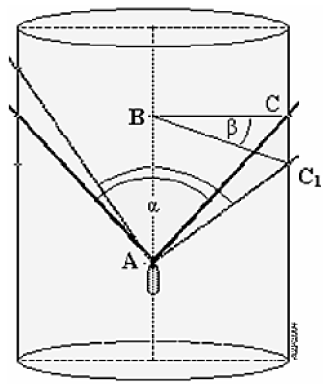
Figure 39. Error measuring with a fork tree
AC = position right arm, while
AC1 = arm position is wrong
Large errors occur at:
Ed = AC1 – AC
