The Process of Surface Irrigation Systems
By using surface irrigation systems, the water flowed from the river, stored and released from the pitcher (reservoir) or pumped from the ground and then given to the land. Excess irrigation water must be removed from the land. Each component requires the design, operation, and maintenance of regulatory and control structures. In order for the system to be efficient and effective, the flow must not only be organized and managed, but most importantly, it should also be measured.
The incidence of surface irrigation process consists of four phases, as illustrated in Figure 7 below.
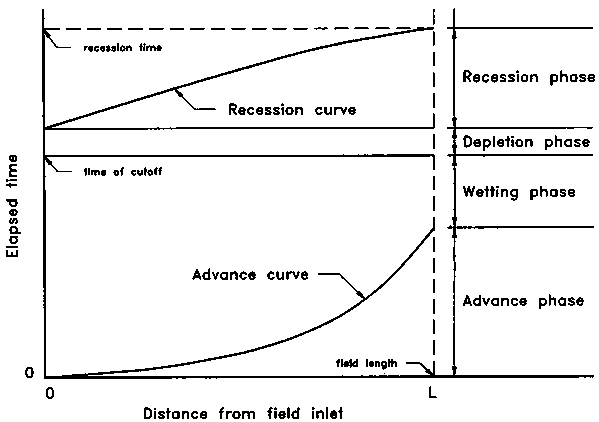
Figure 7. The movement of soil water curve
Phase 1, when the water dalirkan to land, there will be the addition of water on the surface of the land to flooding the entire surface of the land.
Phase 2, then the irrigation water will flow out of the land. The interval between the end of the water surface and when water enters a phase called wetting or flooding.
Phase 3, when the volume of water on the surface of the land began to decline, if the water no longer flowed again, due to the flow surface (run off) or water into the soil.
Phase 4, after no more water coming into the land, the water level will recede and this is a phase of recession.
Some terms in Irrigation:
Basin irrigation is an irrigation system in the form of basins, such as the irrigation system in rice fields.
Furrow irrigation is the irrigation system of administration of water through the trenches.
Wild flooding is the surface irrigation system where water digenangkan on a large area, so that the surface soil becomes waterlogged high enough, so the cropping area will be quite perfect in pembasahannya.
Free flooding irrigation is an irrigation system in which the surface area to be irrigated is divided into several sections or the plot, and then the water flowed from the high to the low.
Check flooding Irrigation is the surface irrigation system where water from the extraction or water source is inserted into the ditch or channel, and then flowed on small plots.
Border strip irrigation systems Irrigation is the surface where irrigated agricultural land will be divided into a small area with bunds measuring 10 x 20 x 100 m2 to 300 m2 and the water flowed into each swath through the doors.
Run off is runoff, residual rain or irrigation water that can not get into the ground and flowing on the surface of the land.
Infiltration is the process of entry of water into the ground.
Hydrology is the science of inundated.
Topography is high or low ground
Excess rainfall is excessive rainfall, the rainfall that can not be utilized by the plant, due to excess.
Evaportanspirasi is the loss of water through the soil and plant parts.
Dependable mainstay of the discharge flow is a minimum flow of the river to the possibility of unmet predetermined that could be used for irrigation.
Landform is a portrait of land to have a micro relief with the obvious physical form, it will directly determine the layout and location of irrigation channels, and the discharge channel.
Reservoir or reservoirs is a building which used to accommodate the irrigation water in times of excess water in the river that can be used any time there is a shortage of water.
Drainage is the manufacture and operation of a system in which the flow of water in the soil created such that both puddles and depth of ground water can be controlled to benefit the farming activities.
Darinase herringbone system is a system that consists of lateral drainage pipelines are placed in parallel and connected to the main pipe by making a certain angle, usually from both sides.
Gridiron system is a drainage system consists of pipes lateral drainage lines are laid in parallel and connected to the main pipe vertically, usually on one side.
