Mika and Ceramic Capacitors
A. Mica Capacitors
Mica is a naturally occurring substance that is due to the physical structure of the crystal is similar to the plate, making it can be laminated into sheets of very thin one. Mika is a very stable type of materials with high permittivity, so that the capacitor capacitors made from these types of materials can produce a good performance specifications.
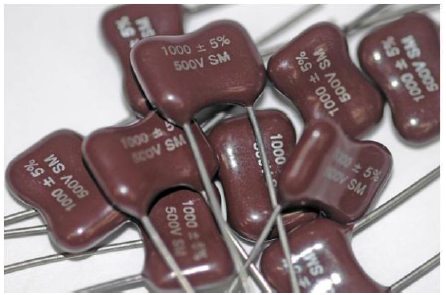
Figure 5.4. Examples capacitor construction Mika
Eletroda-metallic silver-coated electrode is connected directly to the mikanya sheets and the sheets are stacked in such a way and then rolled into a complete capacitor. The assembly has been formed into rolls are then sealed once sealed with a plastic or dipped in resin. This latter process can improve the reliability is better because during the sealing process, pressure is applied to the capacitor lower.
B. Ceramic Capacitors
Based on the type of material, this type can generally be divided into two groups, namely the type of material with low loss rate permetivitas and types of materials with high permittivity loss rates. Types of materials with low permittivity is usually made of steatite, is a natural mineral. The initial process, the material is finely ground and the mixture is then heated to approximately 900 ° C to remove impurities (mixture).
The next stage is rolled back, and is formed at a temperature of about 1300 ° C. Ceramic capacitors generally have the physical form of a flat disc made or square. For example, a sheet of thin plates by metal on both sides and connections conductor soldered to it. Furthermore, at the badanya given as lacquer coating that serves as insulation. Capacitors kinds of material like this has a low temperature coefficient (± 30ppm / ° C) and are usually referred to as a kind of capacitor NPO (non-polarity).
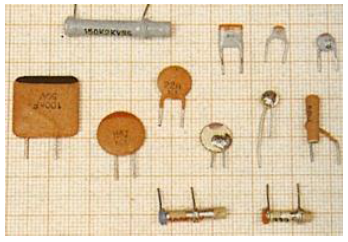
Figure 5.5. Examples of ceramic capacitor construction
Ceramic material with high permittivity has an advantage in getting a large capacitance value with a small volume, and the materials used are barium titanate, whereby the permittivity can reach up to 10,000. Capacitors of this type commonly used for coupling and decoupling the general usability. Because this type of capacitor has a capacitance value changes with considerable variation in width, it is suitable for use in areas that do not require application specifications are critical, such as the effects caused by changes in temperature, frequency, and voltage and changes with time.
Type monolithic ceramic material or ceramic type shaped beams, a relatively new type of material that is introduced. First introduced, intended only for the type of capacitor as a component in the form of chips (chip-SMD) that can be mounted directly in circuits movie or PRT. The advantage of this type of application is that the series inductance is very low because the process is not necessary connection.
With the progress and success of this type of material, then now packaged and electrode connections are connected as a conductor. Development of this type of capacitors made layers are arranged alternately consisting of thin ceramic dielectric made from a material having a permittivity of medium to high with attached electrodes. To form a monolithic block and which has properties such as a piece of ceramic, the layers are compressed and heated.
The value of capacitance that can be achieved, for example, to a value of 4.7 μF with a working voltage of 50V-DC only the dimensions (12 x 12 x 5) mm3. Thus capacitors of this type of material is also a lot that is applied as general usability such as coupling and decoupling, and now competes with many other small electrolytic capacitors.
