Hydraulic Pump Installation
A. Clutch
The clutch is a component connector that connects the prime movers (electric motor) with a hydraulic pump. This clutch to transfer torque from the motor to the hydraulic pump. Also the clutch is a cushion between the motor and pompa.yang will prevent buffeting / vibration for transferring power to the motors for pumps and pump pressures buffeting experience will also be up to the motor. The clutch also tolerate their balance and alignment error (ie non sentrisan between the axis of the motor shaft to the pump shaft axis misalignment).
Examples of coupling
To meet the above mentioned requirements in general the clutch is made from materials:
– Rubber (Rubber couplings)
– gears umbrella (Spiral bevel gear couplings)
– Clutch with a plastic seal (Square tooth clutch with plastic inserts)
B. Hydraulic tank (Reservoir)
Hydraulic Tank (Reservoir) is part of the installation of the power unit konsruksinya is diverse, there is a cylindrical shape and some are square. Function / duty hydraulic tank
– As a place or a hydraulic fluid reservoir.
– The separation of water, air and solid particles that float in the hydraulic fluid.
– Eliminating heat by spreading the heat around the body of the tank.
– The installed power unit components such as pumps, prime movers, valves, accumulators and others.
Hydraulic tank sizes ranging from 3 s / d 5 times the income of the pump in liters / minute and the air space above the maximum liquid level ranges between 10% s / d 15%.
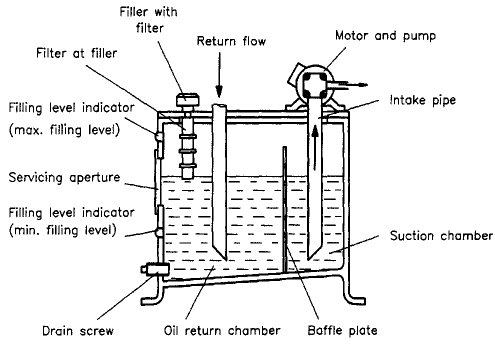
Figure 11 one hydraulic tank construction.
C. Baffle Plate
Baffle Plate serves as a divider between the new hydraulic fluid coming from the circulation and hydraulic fluid to be sucked by the pump. Also serves to rotate the new fluid coming so it has a chance to spread the heat longer, to precipitate impurities and also to separate air and water before it is sucked back into the pump.
D. Filter (Filter)
Filter function to filter out impurities or contaminants from hydraulic system components such as small parts flaking, contamination due to oxidation and so forth. In accordance with the place of installation, there are a variety of filters, namely:
- Suction filter, mounted on suction channels and possibilities in the tank.
- Pressure line filter, mounted on the press line and serves to secure the components that are considered essential.
- Return line filter, installed on the return line to filter for dirt do not get into the tank. Most hydraulic systems always install the suction filter. Figure 12a, 12b and 12c indicating the screening process.
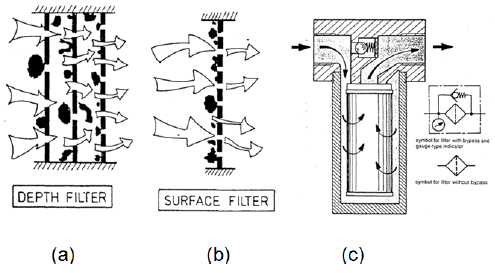
Figure 12. The screening process
