Taro (Colocasia esculents (L.) Schoot)
1). Physical-morphological properties
Taro (Colocasia esculents (L.) Schoot) the tubers are oval to slightly rounded with a diameter of about 10 cm. Taro skin is reddish. Taro skin is rough because there are traces of root growth. Color of white taro meat. Taro leaves are shaped large. This leaves can be used as a protective head when it rains. The leaves surface overgrown with fine hairs that make it watertight because the water will flow directly leaving the leaf surface. The leaves can be used as carp feed. Kind of poluler that can be found in Bogor Bogor ( Colocasia giganteum Hook) Bogor ( Colocasia giganteum Hook), as can be seen in the following picture.
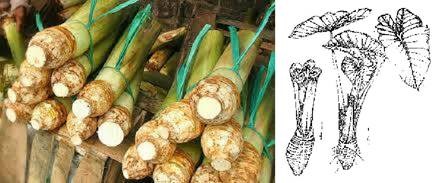
Figure 2.12. Talas Bogor ( Colocasia esculenta. Schott)
2). Chemical properties
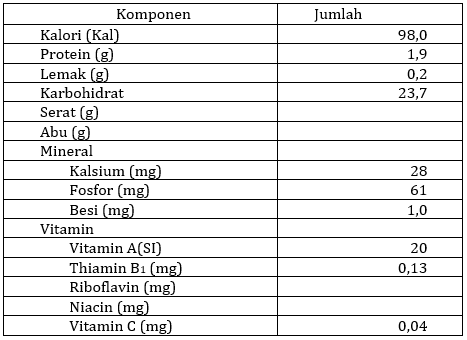
The chemical composition of taro depends on the variety, in addition to other factors such as climate, soil fertility, harvest age and others. Fresh taro tubers are mostly water and carbohydrates. The complete chemical composition of taro tubers can be seen in Table 2.11.
Table 2.11. The chemical composition of fresh taro tubers per 100 grams of material
Taro contains many chemical compounds produced as a secondary product of metabolic processes. The compounds consist of alkaloids, glycosides, saponins, ‘essential oils’, resins, some sugars and organic acids. Taro tubers contain a lot of starch that is easily digested. The content is about 18.2%, while sucrose and reducing sugar are about 1.42%. Taro contains yellow carotenoid pigments and red anthocyanins.
Taro tubers contain calcium oxalate crystals that cause itching. The itching of the taro can be removed by boiling or steaming intensively.
