Understanding Carbohydrates (Starch)
Carbohydrates by plants kept in the fruit for the supply of energy which is then used to carry out the activity of the rest of his life, so that in the process of maturation of the content of carbohydrates (starches) and sugar are always changing. Changes starch in fruits can be divided into:
a. Fruits with high starch content
Changes in starch content in fruits containing high starch content such as apples and bananas can be seen in Figure 16 and 17. In the apple (Figure 16) when harvested already low levels of starch. During storage starch’ve stayed a bit it will run out. On bananas (image 17) when harvested still contain starch as much as 20-30%. After 4-8 days of storage at room temperature, starch content decreases to about 4%, and after 12 days of storage starch content will be exhausted.
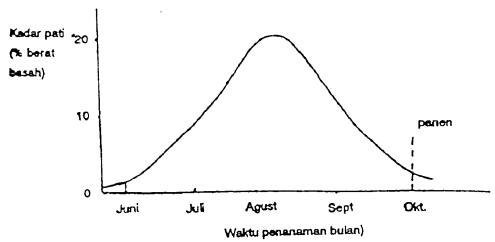
Figure 19. Scheme of changes to the starch content in apples
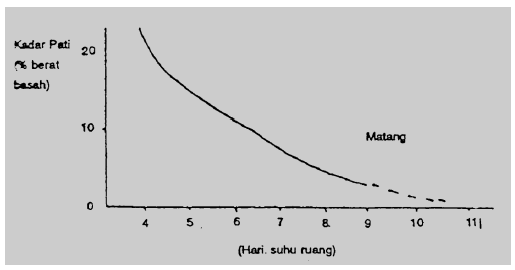
Figure 20. Scheme of the starch content in bananas
b. Fruit with a low starch content
Fruits are included in this group are orange, strawberry, and peach (peach). These fruits are virtually no change in levels of starch after harvest and during storage.
c. simple sugars
Changes of sugar in fruits concerning sucrose, glucose and fructose. Changes in sugar content can be grouped into:
– Fruits with high starch content
Theoretically when hydrolyzed starch glucose will be formed so that the sugar content in the fruit will increase. But in fact these changes are relatively small or sometimes not changed. This is probably due to the resulting sugar used in the process of respiration, or converted into other compounds. In the figure 18 can be seen changes in sugar levels in apples during storage. Seen that, as soon as harvested apples have higher levels of fructose compared to glucose and sucrose and glucose levels were lowest.
During storage there will be changes in which the starch content decreases, sucrose will go up, and sucrose formed should be broken down into glucose and fructose. Most of the glucose that is formed will be used in the process of respiration to provide energy to be used for fruit metabolism.
– Fruits with a low starch content
Fruit with a low starch content such as watermelon when harvested containing very little starch content, so it can not be expected that during storage sugar levels will increase. So that ripened watermelon will not turn out to be sweet.
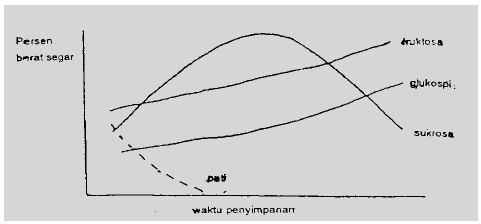
Figure 21. Scheme of the change of starch and sucrose into fructose and glucose in apples during storage.
d. Amino acids and proteins
Amino acids such as methionine and betaalanin important in fruit ripening because this amino acid is a precursor of ethylene in fruit tissue. On an apple that has been cooked, the protein content of less than 0.1% (on a fresh weight), and 80-90% of the amount contained in the peel. In figure 19 seen changes in levels of protein in the skin of apples during fruit ripening process. The increase in protein content, followed by the increase in the respiratory process.

Figure 22. Scheme of protein changes during ripening in the skin on apples
e. Fat
Although the fat content in the fruits are generally low, but its role in the establishment of the texture, flavor and fruit pigments are very large.
In young tomato fruit lipid content present in relatively large quantities. During maturation, these lipids decreased in number, but at full maturity level increases again.
f. Organic acids
Non-volatile organic acid is one among the cellular components that undergo changes during fruit ripening. In tomatoes, the amount of citric and malic acid is 60% of the total organic acids contained in fruit. During maturation, the ratio of malic acid and citric acid will decrease, indicating conversion into citrate malate.
g. Pigment
