Natural Flow Patterns
Discharge area in question is a disposal of excess water and land are planned, either in the form of rivers, lakes or the ocean. This information is very important, especially related facilities denaan placement outlets. Elevation outlet facilities should be set above the maximum advance discharge area, so the water level behind the occurrence of symptoms on a drainage channel plans can be avoided.
A. Natural Patterns
Waster channel layout should be in the lowest part of a region or basin will effectively functions as a collector of child drianase branch collecting ducts, where the collecting ducts and exhaust the natural channel.
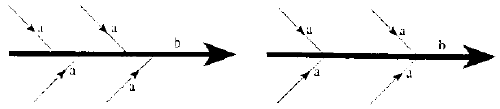
Figure 36. Pattern of natural drainage
a = Channel collector (colector)
b = Channel discharge (conveyor)
B. Pattern Elbow
Waster channel located in the valley and is a natural channel, while the discharge channel is made perpendicular to the collecting duct drainage.
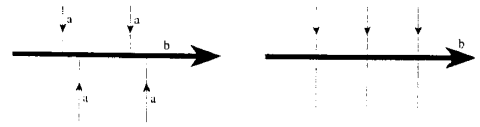
Figure 37. Pattern of drainage elbow
a = Channel collector
b = channel waster
C. Parallel Patterns
The collecting ducts accommodate drainage discharge of the rivers are smaller, made parallel to one another and then into the exhaust duct drainage.
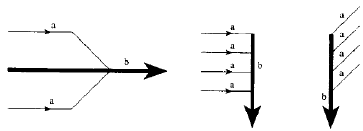
Figure 38. Pattern of parallel drainage
D. Patterns Gridiron
Some interceptor drain is made parallel to one another, then housed in the collecting ducts (collector drain) for further into the discharge channel (conveyor drain).
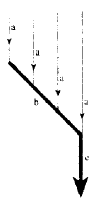
Figure 39. Pattern Drainage Gridiron
E. Radial Pattern
An inundation area drained by several collecting ducts of the point spread in all directions according den area topography.

Figure 40. Pattern Radial Drainage
F. pattern Webs
To prevent loading flow from one area to the other areas, it can be made a few additional collecting ducts (a) which is then accommodated into the discharge channel (b) and then supplied to the main discharge channels.
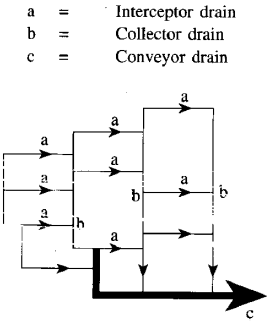
Figure 41. Pattern Drainage Webs
