In digital systems other than binary numbers are also used octal number systems, but these systems are not used in calculations but to shorten binary numbers only. The octal number is known by the eight base system. The following table gives a comparison of numbers: Decimal, Binary and Octal.

Decimal Conversion to Octal
The conversion is done by dividing the eight decimal numbers until the decimal number is divisible and the remainder is written to the right (such as the decimal to binary conversion).

Converting Binary to Octal
The process of change is done by grouping binary numbers into groups, where each group consists of 3 binary bits and starts from LSB. The next step converts each group into an octal form. Example: (1110111001111000) 2 = (—-) 8

Convert Octal to Binary
The process is the opposite of a binary change to octal.
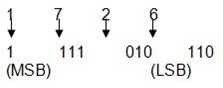 |
a. Octal addition and reduction
In order to facilitate the implementation of addition and reduction of octal numbers then made the table as follows

Explanation:
· Column A: 7 + 7 = (14) 10 = (16) 8
· Column B: 6 + 4 + 1 = (11) 10 = (13) 8
· Column C: 0 + 6 + 1 = (7) 8
· Column D: 2 + 7 + 0 = (9) 10 = (11) 8 So the result is: (11736) 8
b. Multiplication and octal division
The octal multiplication process can be done in 2 ways:
1. Convert octal to decimal, then multiplication is done and the result is converted to octal.
Direct form using tables.

c. Octal division
As with multiplication, octal division can also be done in 2 ways:
1. The divisor and the subdivided are converted first into the decimal form then the result is converted to octal.
2. Using direct octal arithmetic. Example: (1637) 8 : (34) 8
Resolution:
