Physiology of fruits is very important to know for the purpose of handling and processing. Physiology fruit with regard to the following aspects: growth and respiration processes such as maturation, kelayuan (senescence), klimaterik, and the role of ethylene in fruit ripening process.
a. The process of growth and respiration
Stages of fruit growth process generally include cell division, cell maturation (maturation), maturation (ripening), kelayuan (senescence) and putrefaction (deterioration).
b. The process of cell division
Differences old fruit (mature) and mature (ripe) fruit is a state older cells have been grown fruit, medium ripe fruit color, flavor, and hardness has grown to the maximum level. Fruit is old (mature) commonly referred to ripe.
c. respiration
Respiration is the main and important process that occurs in almost all living beings, as well as fruit. The process of respiration in the fruit very bermafaat to carry out their life processes. This respiration process occurs not only when the fruit still on the tree, but once harvested fruits are also still carry out the process of respiration. Respiration is the biological process. In this process oxygen is absorbed to be used in the combustion process that produces energy and was followed by spending the rest of combustion in the form of CO2 and water.
Examples of reactions that occur in the process of respiration as follows:
Cleavage -> Maturing -> wilting -> Maturation -> decay
In the following picture presented curve of the relationship between the growth of the fruit with the amount of CO2 emitted during respiration.
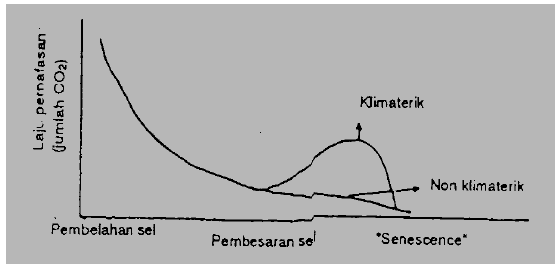
Figure 14. Scheme (curve) the relationship between the growth process with the amount of CO2 emitted (Syarief H., et al., 1977)
In this figure, it appears that the amount of CO2 emitted will continue to decline, then at the approach of “senescence” CO2 production again increased, and then decreased again. Fruits that do that kind of respiration is called klimaterik fruit, while the fruits that the amount of CO2 produced continues to decline slowly until the time of senescence called nonklimaterik fruit.
d. Maturation
The process of fruit ripening very interesting to learn. Changes in umun easily observed is the change in skin color was green to yellow, the fruit that had been flavored sour into sweet, the texture that was hard to be soft (soft), and the emergence of aromas typical for the formation of volatile compounds or compounds volatile.
C6H12O6 + 6O2 -> 6CO2 + 6H2O + energy
The ripening process is defined as a final phase of the decomposition of the substrate and is a process required by materials to synthesize specific enzymes of which are used in the process of wilting.
e. Kelayuan (senescence)
Naturally, after fruit maturation will soon be heading to the next process is wilting. But often without wilting process begins with the process of maturation, this incident occurred on fruit damage, such as bruising, cuts and so on. The occurrence of wilting in the fruit is easily observable that is characterized by the fruit becomes wrinkled skin as a result of reduced water content in the fruit.